
Supporting Your Child Through Developmental Speech Delay
 By Speech Blubs Team•Mar 23, 2026•15 min.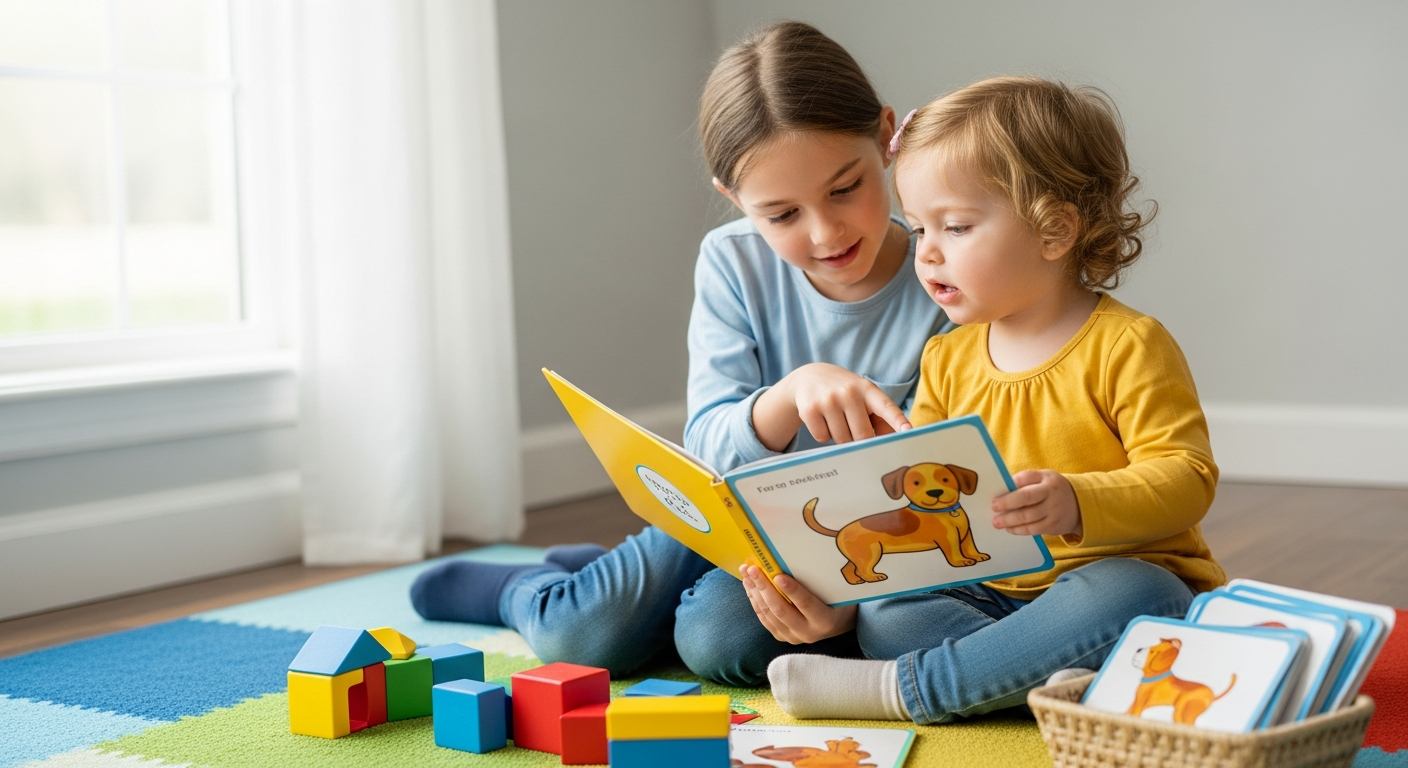
Table of Contents
- Introduction
- Understanding the Basics: Speech vs. Language
- Key Milestones: What to Expect and When
- Common Signs of a Developmental Speech Delay
- What Causes a Developmental Speech Delay?
- The Speech Blubs Approach: Science Meets Play
- Practical Scenarios: Bringing the App to Life
- How Parents Can Support Development at Home
- The Value of a Comprehensive Plan
- Setting Realistic Expectations
- Working with Professionals
- Conclusion
- Frequently Asked Questions
Introduction
Did you know that approximately 1 in 4 children will face some form of speech or language challenge during their early years? If you have ever felt a pang of worry while watching your toddler struggle to find the right words at the playground, or if you have found yourself "translating" your child’s requests for others, you are certainly not alone. At Speech Blubs, we understand that every "ma-ma," "da-da," and "baba" is a victory, and when those milestones seem a little further out of reach, it can feel overwhelming for any parent.
The purpose of this post is to provide you with a compassionate, science-backed roadmap for navigating a potential developmental speech delay. We will explore the differences between speech and language, identify key milestones, discuss the common causes of delays, and provide practical strategies you can use at home today. Most importantly, we want to show you how to transform "screen time" into "smart screen time" that fosters genuine connection and joy. Our mission is to empower every child to speak their minds and hearts, ensuring that no child is left behind in their journey toward communication.

Understanding the Basics: Speech vs. Language
Before we dive into the specifics of a developmental speech delay, it is helpful to clarify what we actually mean by "speech" and "language." While we often use these terms interchangeably, they refer to two distinct but overlapping skill sets.
What is Speech?
Speech is the physical act of producing sounds. It involves the coordination of the lips, tongue, jaw, and breath to create audible words. When we talk about speech, we are focusing on:
- Articulation: How we make individual speech sounds (e.g., the "r" in "rabbit" or the "th" in "thumb").
- Voice: Using our vocal cords and breath to produce sound.
- Fluency: The rhythm and flow of our speaking.
What is Language?
Language is much broader. It is the entire system of giving and receiving information. It’s about understanding the meaning of words and knowing how to put them together to share an idea. Language is divided into two categories:
- Receptive Language: This is what your child understands. Can they follow a simple direction like "Get your shoes"? Do they point to a dog in a book when you ask, "Where is the puppy?"
- Expressive Language: This is what your child says. It includes the vocabulary they use and how they combine words into phrases and sentences to communicate their needs and thoughts.
A child with a developmental speech delay might have a great vocabulary and understand everything you say, but they might be very difficult to understand because they struggle to form sounds. Conversely, a child with a language delay might speak very clearly but only use a few words or struggle to follow instructions.
Key Milestones: What to Expect and When
While every child develops at their own unique pace, there are general windows of time where we expect to see certain communication skills emerge. Keeping an eye on these milestones helps us identify early on if a child might need a little extra support.
By 12 Months
At the one-year mark, your baby is becoming a social butterfly. You should see them:

- Responding to their own name.
- Using simple gestures like waving "bye-bye" or shaking their head "no."
- Making a variety of sounds (babbling) that starts to sound like real conversation.
- Saying "mama" or "dada" specifically to you.
By 18 Months
This is often the "vocabulary explosion" phase. Most toddlers at this age:
- Can say at least 10 to 20 individual words.
- Point to objects or pictures when they are named.
- Can follow one-step directions without gestures (like "Sit down").
- Enjoy "imitating" the sounds and words they hear you say.
By 24 Months (2 Years)
By age two, communication becomes much more functional. You can expect your child to:
- Use simple two-word phrases like "More juice" or "Mommy go."
- Have a vocabulary of at least 50 words (though many have much more!).
- Point to several body parts when asked.
- Be understood by primary caregivers about 50% of the time.
By 36 Months (3 Years)
By age three, your child is likely a regular chatterbox. Look for:
- Three-word or four-word sentences.
- The use of pronouns (I, you, me, we).
- The ability to follow two-step directions (e.g., "Pick up your toy and put it in the box").
- Speech that is understood by strangers about 75% of the time.
Expert Insight: If you feel like your child is missing these milestones, it is always better to act sooner rather than later. Early intervention is the most effective way to help a child catch up. You can start by taking our quick 3-minute preliminary screener which consists of 9 simple questions to help you get a better sense of your child's current level.
Common Signs of a Developmental Speech Delay
Recognizing a delay isn't always about counting words. Sometimes, it is about observing how your child interacts with the world around them. Here are some "red flags" that may indicate a developmental speech delay:
- By 12 Months: Your child isn't pointing at things or using any gestures.
- By 18 Months: They prefer using gestures or pointing over trying to make sounds to get what they want.
- By 2 Years: They can only imitate speech but don't produce words or phrases on their own. They might also have trouble following simple, everyday commands.
- Unusual Tone: Your child has an unusually raspy, breathy, or nasal-sounding voice.
- Difficulty Being Understood: If you, as the primary caregiver, struggle to understand more than half of what your 2-year-old says, it’s a sign to seek a professional opinion.
What Causes a Developmental Speech Delay?
It is important for parents to know that a speech delay is rarely the result of something they did or didn't do. Many factors can contribute to how a child’s communication skills unfold.
1. Oral-Motor Challenges
Many children with a developmental speech delay have what we call oral-motor problems. This happens when the areas of the brain that control speech have difficulty coordinating the muscles in the lips, tongue, and jaw. If a child cannot move their tongue to the roof of their mouth, they will struggle with sounds like "l" or "t." Some children might also have a "short frenulum" (being tongue-tied), which physically limits how much the tongue can move.
2. Hearing Loss
We often say that children "speak what they hear." If a child has undiagnosed hearing loss—even a mild one caused by chronic ear infections—they will struggle to imitate sounds and learn vocabulary. This is why an audiologist's evaluation is often the first step when a parent expresses concern about speech.
3. Developmental Disorders
Sometimes, a speech delay is a symptom of a broader developmental condition. Children on the Autism Spectrum often have delayed or atypical speech patterns. Similarly, children with global developmental delays or intellectual disabilities may reach speech milestones later than their peers.
4. Environmental Factors
While less common as a primary cause, a lack of verbal stimulation can impact progress. Children who are frequently plopped in front of passive cartoons for hours may miss out on the back-and-forth social interaction required for language growth. This is why our mission at Speech Blubs is to provide a "smart" alternative to passive screen time—one that encourages kids to engage, mimic, and participate.
The Speech Blubs Approach: Science Meets Play
At Speech Blubs, our story is personal. Our founders all grew up with speech problems themselves. They created this tool because it was the resource they wished they had when they were struggling to find their voices. We believe that therapy should not be a chore; it should be a joyful, "smart screen time" experience that brings families together.
Our methodology is rooted in Video Modeling. Research shows that children learn best by watching and imitating their peers. Unlike cartoons with talking animals or abstract shapes, our app features real children—our "Blubers"—performing speech exercises. When your child sees another child making a "pop" sound with their lips, their "mirror neurons" in the brain fire, making it much more likely that they will try to imitate that sound themselves.
This peer-to-peer approach is one of the reasons we are backed by science and highly rated by experts. We don't just show a word; we show a child the process of speaking that word.
Practical Scenarios: Bringing the App to Life
How does this look in your living room? We designed Speech Blubs to be an interactive experience that fits into your child’s existing interests. Let’s look at two common scenarios:
Scenario 1: The Animal Lover
Imagine a 2-year-old named Leo who has a developmental speech delay. Leo loves dogs and cows but hasn't started making animal sounds yet. His parents use the "Animal Kingdom" section of the app. Instead of just hearing a recording of a cow, Leo watches a real boy his age on the screen wearing a fun digital cow-ear filter. The boy says "Moooo" and then waits.
Because it’s a peer and not a cartoon, Leo feels a social connection. He tries to match the shape of the boy's mouth. When Leo makes a sound, his parents cheer, turning the app session into a "family connection" moment. This reduces Leo’s frustration and builds the foundational confidence he needs to keep trying.
Scenario 2: The Picky Eater
Meet 3-year-old Maya. She understands a lot, but her expressive language is limited, leading to "hangry" tantrums because she can't tell her parents what she wants to eat. Her parents use the "Yummy Time" section.
Maya watches a girl on the screen eat a piece of fruit and say "Apple." Maya is encouraged to repeat the word to see a fun digital reward. Her parents then bring a real apple into the room to reinforce the word. By bridging the gap between the app and the real world, they are helping Maya use her new skills to communicate her immediate needs, significantly reducing daily frustration.
How Parents Can Support Development at Home
While professional therapy with a Speech-Language Pathologist (SLP) is often necessary for a developmental speech delay, parents are the primary "engine" of a child's progress. Here is how you can help:
- Narrate Your Day: Talk about what you are doing as you do it. "I am washing the blue bowl. Now I am drying the bowl." This provides a constant stream of meaningful language.
- Read Together Every Day: You don't even have to read the words on the page. Point to the pictures and describe them. "Look at the big red bus! Beep beep!"
- Focus on Communication, Not Just Perfection: If your child points to the milk and says "Mi," celebrate it! Repeat back the full word: "Yes, you want your milk!" This reinforces their effort without making them feel "wrong."
- Limit Passive Viewing: Swap out standard cartoons for interactive tools. You can download Speech Blubs on the App Store or Google Play to ensure that when your child is using a device, they are actively practicing communication skills.
The Value of a Comprehensive Plan
We are often asked about the best way to use Speech Blubs. We always suggest framing our app as a powerful supplement to your child’s overall development plan. It is a tool for "co-play," meaning the best results happen when an adult sits with the child, making the sounds together and celebrating every attempt.
When you decide to join the Speech Blubs family, we want to be transparent about how our plans work so you can make the best choice for your budget and your child’s needs.
Monthly Plan: $14.99 per month
This is a great option if you just want to dip your toes in and see if your child enjoys the interface. It provides access to our core speech-building exercises.
Yearly Plan: $59.99 per year (The Best Value)
The Yearly plan is by far our most popular choice, and for good reason. It breaks down to just $4.99 per month, saving you 66% compared to the monthly rate. But the value goes beyond just the price tag. The Yearly plan includes:
- A 7-Day Free Trial: You can explore everything we have to offer risk-free.
- The Reading Blubs App: As your child masters speech, they can transition into early literacy skills with our companion app, included at no extra cost.
- Priority Support: You get a 24-hour response time from our support team to help you with any questions.
- Early Access: You will be the first to receive new updates and content releases.
We encourage parents to create their account and start their free trial to see the difference for themselves. Check out our parent testimonials to see how other families have navigated a developmental speech delay with our support.
Setting Realistic Expectations
It is important to remember that progress isn't always a straight line. Some weeks your child might learn five new words, and other weeks they might seem to plateau. Our goal isn't to promise that your child will be giving public speeches in a month. Instead, we focus on:
- Building Confidence: Reducing the "shutting down" that happens when a child feels they can't be understood.
- Fostering a Love for Communication: Making "talking" a fun game rather than a stressful task.
- Reducing Frustration: Giving children the tools to express basic needs, which often leads to fewer tantrums.
- Developing Foundation Skills: Strengthening the oral-motor muscles and imitation skills that are required for complex speech later on.
Working with Professionals
If you suspect a developmental speech delay, your first stop should always be your pediatrician. They can refer you to a Speech-Language Pathologist (SLP) for a formal evaluation. In the United States, you can also look into "Early Intervention" programs, which are often state-funded and provide evaluations and therapy for children under age three.
Speech Blubs is designed to work hand-in-hand with professional therapy. Many SLPs actually use our app in their sessions or recommend it as "homework" for parents to do between visits. It keeps the child engaged and practicing the same skills the therapist is working on, but in a way that feels like play.
Conclusion
Navigating a developmental speech delay can feel like a lonely journey, but it doesn't have to be. By staying informed about milestones, engaging in active play, and utilizing smart tools, you are giving your child the best possible start. Remember, the goal isn't perfection; it’s connection. Every sound, gesture, and attempt to communicate is a building block toward a lifetime of expression.
We invite you to join our community of over 4 million parents who are working to help their children "speak their minds and hearts." There is no better time to start than today.
Ready to get started? Download Speech Blubs on the App Store or Google Play Store and begin your 7-day free trial. For the best value and access to our full suite of features—including the Reading Blubs app and priority support—be sure to select our Yearly plan at just $59.99 per year.
Frequently Asked Questions
1. Can a child outgrow a developmental speech delay on their own?
While some children are "late talkers" who eventually catch up without intervention, it is impossible to know which children will catch up and which have an underlying delay that will persist. Research consistently shows that early intervention is the most effective approach. "Waiting and seeing" can often lead to a child falling further behind their peers, especially as they enter school.
2. Is a speech delay a sign of low intelligence?
Absolutely not. Speech and language skills are a specific developmental domain and are not a direct reflection of a child’s cognitive ability or intelligence. Many children with a developmental speech delay are incredibly bright and have excellent problem-solving skills; they simply have a hurdle in the physical or neurological process of producing or processing language.
3. Will using a speech app replace the need for a therapist?
No. While Speech Blubs is a powerful tool backed by video modeling science, it is intended to be a supplement to, not a replacement for, professional medical advice or therapy. A Speech-Language Pathologist can provide a personalized diagnosis and targeted treatment plan. Our app is a wonderful way to practice those skills at home in a fun, engaging way.
4. How much screen time is safe for a toddler with a speech delay?
The American Academy of Pediatrics generally recommends limiting screen time for very young children. However, they also distinguish between "passive" screen time (like watching a cartoon) and "interactive" or "educational" screen time. Speech Blubs is designed for "smart screen time," where the child is active, vocalizing, and ideally playing alongside a parent. We recommend short, frequent sessions (5–15 minutes) rather than long periods of use.
About the author