
Supporting Your Child Through Speech Delays in Toddlers
 By Speech Blubs Team•Mar 23, 2026•14 min.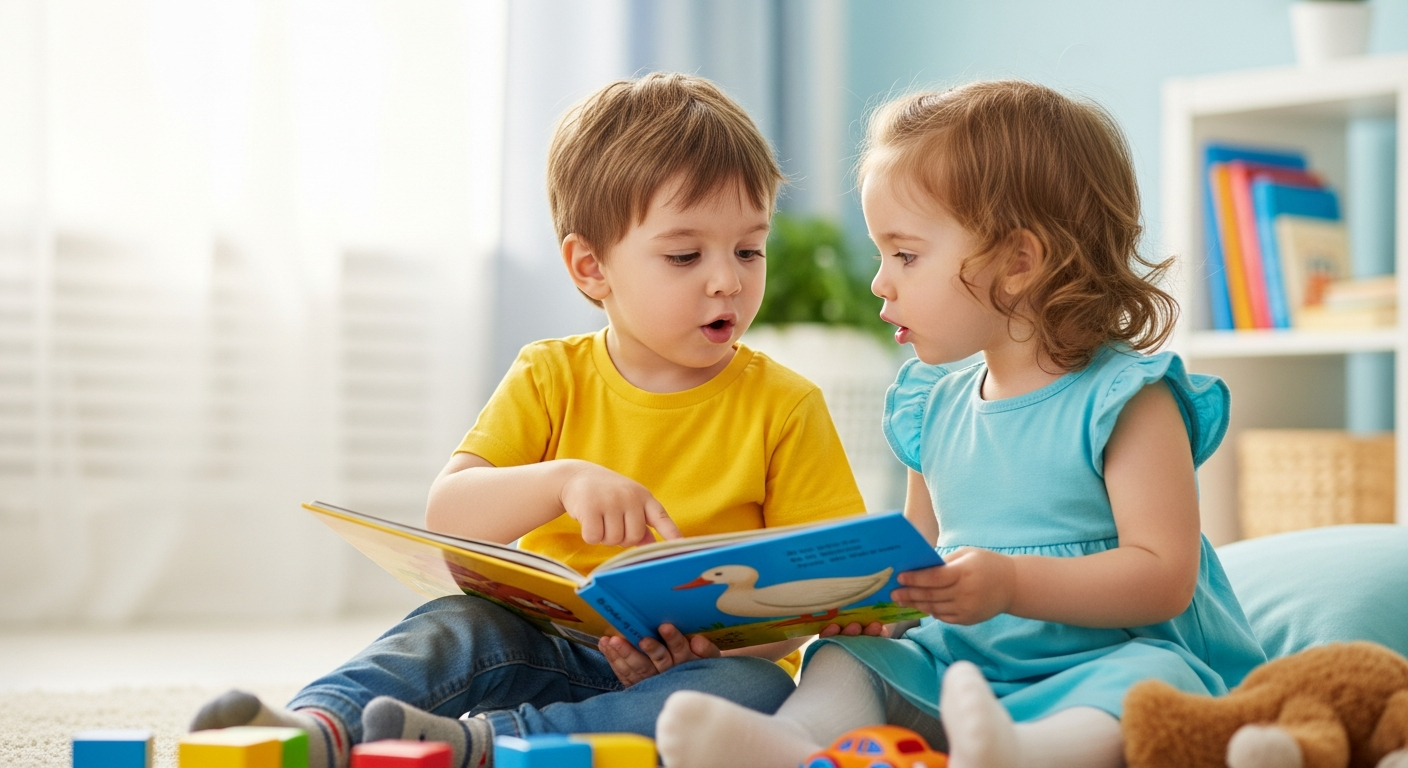
Table of Contents
- Introduction
- Defining Speech vs. Language: What’s the Difference?
- Recognizing the Signs of Speech Delays in Toddlers
- What Causes Speech Delays in Toddlers?
- The Speech Blubs Methodology: Science Meets Play
- Practical Scenarios: How Speech Blubs Works in Real Life
- Encouraging Speech at Home: Beyond the Screen
- Understanding the Value of Your Support Plan
- Setting Realistic Expectations
- When to Seek Professional Help
- Conclusion
- FAQ
Introduction
Did you know that approximately one in five children will learn to talk or use words later than their peers? If you have ever sat in a playgroup, watching other children chatter away while your little one remains quiet or relies on gestures, you know the quiet tug of concern that can pull at a parent's heart. We understand that wait—the anticipation of the very first "mama," the first story, and the first time they can truly tell you what they are thinking. At Speech Blubs, our mission is to empower children to speak their minds and hearts because we believe every child has a unique voice that deserves to be heard.
This post is designed to be a supportive resource for families navigating the complexities of speech delays in toddlers. We will explore the critical differences between speech and language, outline the milestones you should look for, discuss the potential causes behind these delays, and provide practical, joyful ways to encourage communication at home. Most importantly, we want to share how our unique approach to "smart screen time" can act as a powerful supplement to your child’s development. Our goal is to move from a place of worry to a place of action, helping you build your child's confidence one word at a time.

Defining Speech vs. Language: What’s the Difference?
When we talk about speech delays in toddlers, it is easy to use the terms "speech" and "language" interchangeably. However, in the world of child development, they represent two very different—though deeply connected—skills. Understanding this distinction is the first step in identifying how best to support your child.
What is Speech?
Speech refers to the physical act of producing sounds and words. It involves the coordination of the lips, tongue, jaw, and vocal tract to create audible communication. When a child has a speech delay, they may know exactly what they want to say, but they struggle with the "mechanics" of saying it. This might manifest as:
- Articulation issues: Difficulty making specific letter sounds (like saying "wabbit" instead of "rabbit").
- Voice disorders: Problems with the pitch, volume, or quality of the voice.
- Fluency: Challenges with the flow of speech, such as stuttering.
What is Language?
Language is much broader. It is the entire system of giving and receiving information. It involves understanding what others say (receptive language) and being able to share thoughts, needs, and ideas (expressive language). A child with a language delay might be able to pronounce words perfectly, but they may only be able to put two words together when their peers are using full sentences.
Think of it this way: Speech is the "tool" (the voice and mouth), while language is the "content" (the meaning and the rules of how we use those tools). If you are unsure where your child stands, we invite you to take our quick 3-minute preliminary screener. It consists of 9 simple questions that provide an assessment and a next-steps plan to help you understand your child’s specific needs.
Recognizing the Signs of Speech Delays in Toddlers
Every child develops at their own pace, and there is a wide range of "normal" when it comes to hitting milestones. However, there are established guidelines that help us identify when a child might need a little extra encouragement.

Milestones by Age
- By 12 Months: Most babies are beginning to "babble" with intonation, responding to their names, and using simple gestures like waving "bye-bye" or pointing at objects they want.
- By 18 Months: Toddlers typically have a vocabulary of at least 10 to 25 words. They should be able to follow one-step directions (like "pick up the ball") without needing a gesture to show them what to do.
- By 24 Months: This is a major milestone year. Most toddlers can say 50 to 100 words and are beginning to put two words together (e.g., "More juice" or "Mommy go").
- By 3 Years: A child's vocabulary often expands to hundreds of words, and they should be understood by strangers about 75% of the time.
Red Flags to Watch For
While falling slightly behind a milestone isn't always a cause for immediate alarm, certain "red flags" suggest it’s time to consult a professional. You should reach out to your pediatrician if your child:
- Doesn't use gestures (pointing/waving) by 12 months.
- Prefers gestures over vocalizing to communicate by 18 months.
- Has trouble imitating sounds by 18 months.
- Can only imitate speech but doesn't produce words or phrases spontaneously by age 2.
- Shows a regression in skills (stops saying words they used to know).
If you are seeing these signs, remember that you are your child's best advocate. You can visit our main homepage to learn more about how early intervention and consistent practice can help bridge these gaps.
What Causes Speech Delays in Toddlers?
When a parent first suspects a delay, the first question is almost always "Why?" It is important to remember that a delay is rarely the result of something a parent did or didn't do. Most often, speech delays in toddlers are rooted in physical or developmental factors.
Oral-Motor Problems
Many children with speech delays have oral-motor challenges. This happens when there is a "communication breakdown" in the areas of the brain responsible for speech. The brain struggles to coordinate the lips, tongue, and jaw to produce the correct sounds. In some cases, this is referred to as Childhood Apraxia of Speech (CAS). These children might also have difficulty with other oral tasks, such as chewing certain textures of food.
Hearing Loss and Chronic Ear Infections
We cannot emphasize enough how closely hearing is tied to speaking. If a child cannot hear sounds clearly, they cannot learn to imitate them. Chronic ear infections can cause "muffled" hearing, similar to being underwater. This makes the nuances of language—like the difference between a "p" and a "b" sound—nearly impossible to distinguish. We always recommend an audiology check-up as one of the first steps in addressing speech concerns.
Developmental Conditions
In some instances, speech delays in toddlers are a symptom of a broader developmental picture. This could include Global Developmental Delay or Autism Spectrum Disorder (ASD). Children with ASD often struggle with the social-pragmatic side of language—knowing how to use language to interact with others, maintain eye contact, or engage in "back-and-forth" play.
The Speech Blubs Methodology: Science Meets Play
At Speech Blubs, we don’t just create apps; we create "smart screen time" experiences designed to turn passive viewing into active learning. Our company was born from the personal experiences of our founders, who all grew up with speech problems themselves. They created the tool they wished they’d had—one that feels like a game but is rooted in proven scientific principles.
The Power of Video Modeling
Our core methodology is called video modeling. Have you ever noticed how your toddler wants to do exactly what another child is doing? That is because children are hardwired to learn from their peers. In the Speech Blubs app, your child watches videos of other children (our "Blubbers") performing speech exercises, making sounds, and saying words.
This triggers mirror neurons in the brain. When a child sees another child’s face and mouth moving to create a sound, those same neural pathways fire in their own brain, making them much more likely to imitate the sound. It transforms the screen from a "babysitter" into a digital peer who encourages them to participate. You can read more about the science and research behind our method here.
Creating Joyful Family Learning Moments
We believe that the best learning happens when children are having fun and feel supported by their families. Our app isn't meant to be used in isolation. Instead, we frame our activities with an implicit understanding of adult co-play. When you sit with your child and laugh at the fun face filters in our "Face Gym" section, you are creating a positive association with communication. This reduces the frustration often associated with speech delays in toddlers and builds the confidence they need to keep trying.
Practical Scenarios: How Speech Blubs Works in Real Life
To understand the impact of a play-based approach, let’s look at how specific features of the app can help in everyday situations.
Scenario 1: The Animal Lover For a parent whose 3-year-old "late talker" loves animals, the "Animal Kingdom" section of the app offers a fun, motivating way to practice. If your child isn't yet saying "Cow," they might be very excited to imitate the "Moo" sound they hear from a peer on the screen. By starting with simple animal sounds, we build the foundational motor skills and confidence required to eventually move on to more complex words. Download Speech Blubs on the App Store to explore these categories today.
Scenario 2: The High-Energy Toddler Some children find it hard to sit still for traditional "learning" time. Our "Sing Along" section uses rhythm and music to engage the whole body. For a child who struggles with the flow of language, singing simple, repetitive songs helps them understand the "tempo" of speech. It turns a practice session into a dance party, making the process of overcoming speech delays in toddlers feel like play rather than work.
Encouraging Speech at Home: Beyond the Screen
While tools like Speech Blubs are incredibly effective, they are most powerful when supplemented by a language-rich environment at home. Here are some strategies we love:
Narrate Your Day
Think of yourself as a sports commentator for your child's life. As you go about your chores, talk about what you are doing. "I am pouring the cold milk into the blue cup. Now, I am stirring it with a silver spoon." This "parallel talk" helps your child connect words to actions and objects in real-time without the pressure of having to respond.
Read with Intent
Reading is one of the best ways to combat speech delays in toddlers, but it doesn't always have to be about reading every word on the page. For younger toddlers, point to the pictures. Ask, "Where is the red bird?" and wait. Give them at least 10 seconds to process and respond. This "wait time" is crucial for children with processing delays.
Use "Choices" to Empower
Instead of asking "What do you want to drink?" (which can be overwhelming), try giving two clear choices while holding the items up. "Do you want milk or juice?" This gives the child a clear model of the words they need to use and makes it easier for them to attempt a verbal response or a specific point.
Understanding the Value of Your Support Plan
We want to be transparent and helpful as you decide how to invest in your child’s communication journey. Supporting a child with speech delays in toddlers is a marathon, not a sprint, and we have designed our plans to offer the best long-term value for your family.
The Yearly Plan: Our Best Value
While we offer a monthly subscription, the Yearly Plan is the clear choice for families committed to seeing progress.
- Price: $59.99 per year (which breaks down to just $4.99/month).
- Savings: You save 66% compared to the monthly rate.
- Exclusive Features: The Yearly plan includes a 7-day free trial, giving you a full week to explore the app with your child at no cost.
- Bonus Apps: It also includes access to our Reading Blubs app, which helps transition speech skills into early literacy.
- Priority Support: You get early access to new updates and a 24-hour support response time.
The Monthly Plan is $14.99 per month and does not include the free trial, the Reading Blubs app, or priority support. To give your child the full suite of features and the time they need to grow, we highly recommend the yearly option. You can create your account and begin your 7-day free trial today to see the difference for yourself.
Setting Realistic Expectations
It is important to remember that every child's journey is unique. We often get asked, "How soon will my child talk?" While we provide a powerful tool, we avoid making guaranteed outcomes like "your child will be speaking in sentences in 30 days." Instead, we focus on the benefits of the process:
- Reducing Frustration: When a child learns even a few new signs or sounds, their frustration levels drop significantly.
- Building Confidence: Success breeds success. Small wins in the app lead to bigger attempts in real life.
- Foundational Skills: We focus on the building blocks—imitation, turn-taking, and sound production—that are necessary for long-term communication success.
Our app is a wonderful supplement to professional therapy and a great way to keep the momentum going between sessions. We are proud to be part of a global community of parents who have seen their children flourish. You can read testimonials from other parents here to hear their stories of hope and progress.
When to Seek Professional Help
While home activities and "smart screen time" are vital, they do not replace the expertise of a Speech-Language Pathologist (SLP). If you remain concerned about speech delays in toddlers, an evaluation is always a good idea. An SLP can provide a formal diagnosis and create a customized treatment plan. In the United States, you can also look into Early Intervention programs (often called "Part C"), which provide services to children under age three, often at little to no cost to the family.
Early identification is the most effective approach. The sooner you start supporting those neural pathways, the easier it is for your child to catch up. Don't "wait and see" if your gut is telling you something is off. Take that first step today.
Conclusion
Navigating speech delays in toddlers can feel like a lonely journey, but it doesn't have to be. By understanding the milestones, identifying the signs early, and incorporating joyful, scientifically-backed play into your daily routine, you are giving your child the greatest gift possible: the ability to communicate. At Speech Blubs, we are honored to be a part of your family’s story. Whether it’s through the peer-to-peer magic of video modeling or the quiet moments of reading together, every effort you make is building a bridge to your child’s future.
We invite you to join our community and start this journey with us. The best way to begin is by experiencing the app firsthand. Download Speech Blubs on Google Play or the App Store to start your 7-day free trial. Remember to select the Yearly plan to unlock the best value, including the Reading Blubs app and our full library of over 1,500 activities. Let’s work together to help your little one speak their mind and heart!
FAQ
1. Can a toddler catch up from a speech delay?
Yes, many toddlers with speech delays catch up to their peers, especially with early intervention and a supportive, language-rich environment. While some children may have underlying conditions that require long-term support, many "late talkers" flourish once they receive the right tools and encouragement.
2. Is screen time bad for a toddler with a speech delay?
Not all screen time is created equal. Passive screen time, like watching cartoons, does not require a child to interact. However, "smart screen time" like Speech Blubs uses video modeling to encourage active participation, imitation, and vocalization, making it a productive part of a child's learning plan.
3. How do I know if it’s a speech delay or autism?
While speech delay is a common sign of autism, it is not the only one. Children with autism also typically show challenges with social interaction, eye contact, and repetitive behaviors. If you are concerned, it is best to consult a pediatrician for a formal developmental screening.
4. What is the most important thing I can do at home?
The most important thing is to keep communication joyful and pressure-free. Narrate your day, read together, and use tools that encourage imitation through play. Reducing a child's frustration and building their confidence are the most vital steps in fostering a love for talking.
About the author