
Supporting Your Child with Delayed Speech in Children
 By Speech Blubs Team•Mar 23, 2026•13 min.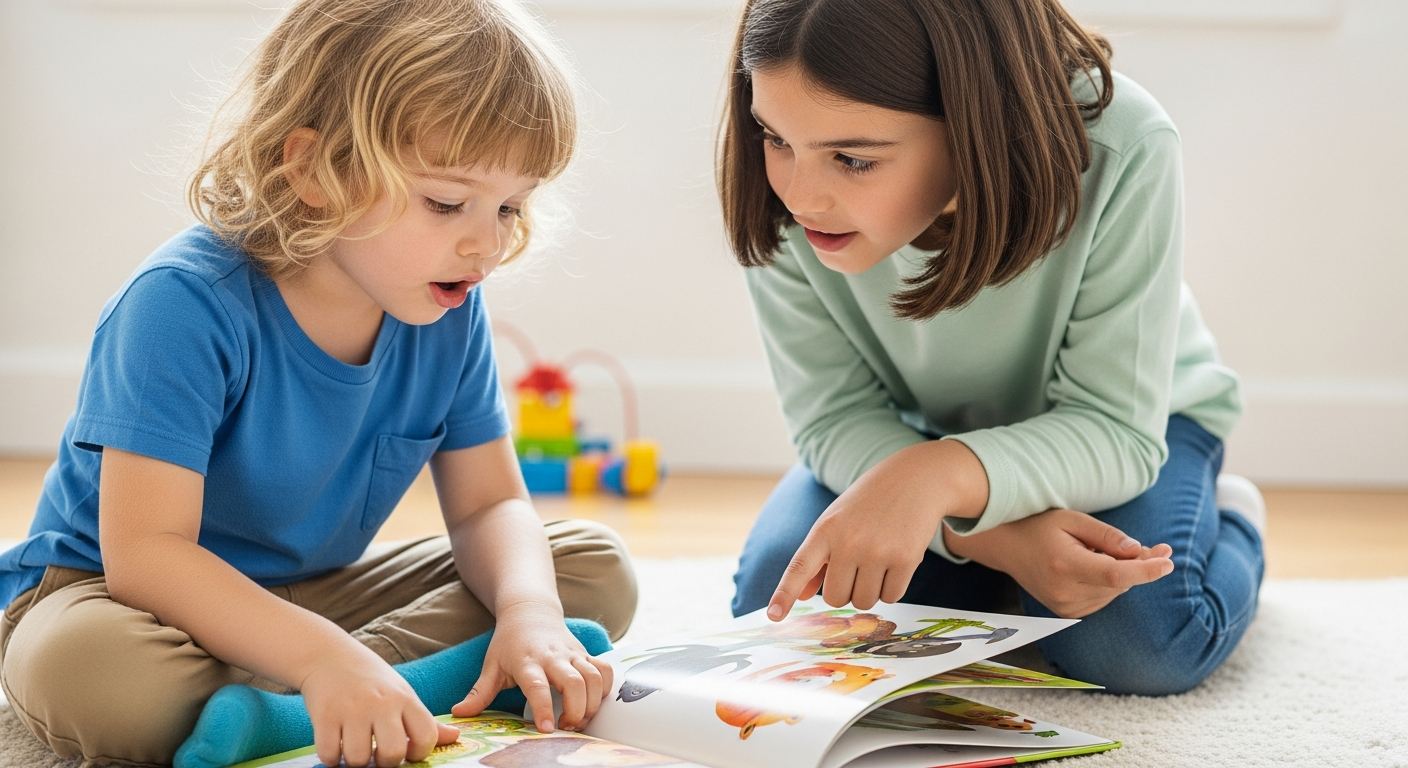
Table of Contents
- Introduction
- Understanding the Basics: Speech vs. Language
- Milestones: Tracking Your Child’s Progress
- Red Flags: When to Seek Professional Advice
- Common Causes of Delayed Speech in Children
- The Speech Blubs Methodology: Why Peer Imitation Works
- Practical Strategies for Home Support
- Navigating the Path to Professional Help
- Choosing the Right Plan for Your Family
- Setting Realistic Expectations
- Conclusion
- Frequently Asked Questions
Introduction
Imagine the quiet anticipation of waiting for your toddler’s first word. You’ve pictured the moment a thousand times—will it be "Mama," "Dada," or perhaps "ball"? For many parents, that silence lingers longer than expected, turning excitement into a quiet, gnawing worry. If you are currently navigating this journey, you are far from alone. Statistics suggest that nearly 1 in 4 children will face some form of communication challenge during their early years. At Speech Blubs, we understand this worry deeply because our founders grew up with speech problems themselves. They created the tool they wished they had—a joyful, scientifically-backed way to help children find their voices.
Our mission is to empower children to speak their minds and hearts. We believe that every child deserves the opportunity to communicate effectively, and we are committed to providing an immediate, effective, and joyful solution for families. In this comprehensive guide, we will explore the nuances of delayed speech in children, from understanding developmental milestones and identifying red flags to exploring the causes and providing practical, home-based strategies. We will also discuss how our unique "smart screen time" can supplement your child’s growth, fostering a love for communication through the power of peer-to-peer imitation.

By the end of this article, you will have a clearer understanding of how to support your child’s unique path, when to seek professional guidance, and how to turn daily routines into powerful learning moments.
Understanding the Basics: Speech vs. Language
Before diving into the specifics of a delay, it is essential to distinguish between two terms that are often used interchangeably: speech and language. While they are closely related, they represent different sets of skills.
What is Speech?
Speech refers to the actual verbal expression of language. It involves the physical act of producing sounds and words. This includes:
- Articulation: How we form sounds using our mouth, lips, and tongue.
- Voice: The use of vocal folds and breath to produce sound (considering pitch, volume, and quality).
- Fluency: The rhythm and flow of talking (addressing issues like stuttering).
A child with a speech delay might understand exactly what they want to say but struggle to coordinate the physical movements required to produce the sounds clearly.
What is Language?
Language is a broader system of giving and receiving information. It is about understanding and being understood through communication, whether that is verbal, non-verbal, or written.
- Receptive Language: The ability to understand what others are saying. This involves following directions, identifying objects, and comprehending stories.
- Expressive Language: The ability to communicate thoughts, needs, and ideas. This includes using gestures, words, and forming sentences.
A child with a language delay might be able to pronounce words perfectly but only be able to put two words together, or they might struggle to follow simple instructions despite having no hearing issues. Often, delayed speech in children involves an overlap of both areas.
Milestones: Tracking Your Child’s Progress
Every child develops at their own pace, but developmental milestones serve as a helpful roadmap for parents. These markers help us identify when a child might need a little extra support to stay on track.

0 to 12 Months: The Foundation
In the first year, babies are "pre-linguistic" learners. They are absorbing the sounds of their environment and learning that their voice has power.
- By 6 months: They should be making "raspberries," squealing, and beginning to babble with consonant sounds (like "ba-ba" or "da-da").
- By 9 months: They should look when their name is called and use gestures like reaching to be picked up.
- By 12 months: They should understand "no," wave "bye-bye," and perhaps have one or two specific words like "Mama" or "Dada."
12 to 24 Months: The Word Explosion
This is the stage where communication becomes more intentional and varied.
- By 15 months: A child should follow simple one-step directions (like "Give me the ball") and point to things they want.
- By 18 months: They should have a vocabulary of at least 3 to 10 words and be able to point to several body parts.
- By 24 months: This is a major milestone. A child should be using at least 50 words and beginning to combine two words together, such as "more juice" or "Mommy go."
24 to 36 Months: Complex Communication
At this stage, children begin to use language to share their world, ask questions, and interact more deeply with peers.
- By 30 months: They should be using pronouns (I, me, you) and follow two-step directions.
- By 3 years: A child’s speech should be roughly 75% intelligible to strangers. They should be using three-word sentences and asking "why" or "what" questions.
Key Takeaway: If you feel your child is missing these markers, don't wait. You can take our quick 3-minute preliminary screener to get a simple assessment of where they stand and receive a tailored next-steps plan.
Red Flags: When to Seek Professional Advice
While a "wait and see" approach was common in the past, modern research emphasizes that early intervention is key. If you notice the following red flags regarding delayed speech in children, it is wise to consult your pediatrician or a speech-language pathologist (SLP).
- Lack of Gestures: If your child isn't pointing, waving, or reaching by 12 months.
- Preference for Gestures: By 18 months, if they prefer pointing and grunting over attempting to use vocalizations.
- Difficulty Imitating: If they struggle to mimic sounds or actions by 18 months.
- Regression: If your child loses skills they once had (e.g., they used to say 10 words but now say none), this requires immediate medical attention.
- Limited Vocabulary: Having fewer than 50 words by age two.
- Intelligibility Issues: If a parent cannot understand 50% of what a two-year-old says, or 75% of what a three-year-old says.
- Social Disconnection: If a child does not seem interested in interacting with others or lacks "joint attention" (following your gaze to look at an object).
Common Causes of Delayed Speech in Children
Understanding the "why" behind a delay can help parents feel more empowered and less guilty. Delayed speech is rarely caused by something a parent did or didn't do; it is often a combination of biological and environmental factors.
1. Oral-Motor Issues
Some children have difficulty coordinating the muscles in their mouth. This is known as an oral-motor impairment. It can be caused by problems in the areas of the brain that send signals to the muscles of the lips, tongue, and jaw. A specific condition called Childhood Apraxia of Speech (CAS) occurs when the brain struggles to plan the movements necessary for speech.
2. Hearing Impairment
A child who cannot hear clearly will naturally struggle to imitate sounds. Even temporary hearing loss from chronic ear infections can impact language acquisition during critical developmental windows. This is why an audiology exam is almost always the first step in a speech evaluation.
3. Developmental Conditions
Delayed speech in children can sometimes be a symptom of a broader developmental profile.
- Autism Spectrum Disorder (ASD): Challenges with social communication are a hallmark of ASD.
- Global Developmental Delay: If a child is delayed in multiple areas (motor, cognitive, social), speech is often impacted as well.
4. Environmental Factors
While less common as a primary cause, a lack of verbal stimulation or excessive "passive" screen time (like watching cartoons alone) can slow down progress. This is why we advocate for "smart screen time," which focuses on active participation rather than passive viewing.
The Speech Blubs Methodology: Why Peer Imitation Works
At Speech Blubs, we don't believe in just "parking" a child in front of a screen. Our approach is rooted in Video Modeling, a scientifically proven method that utilizes "mirror neurons." When a child watches another child—a peer—perform a task, their brain reacts as if they are doing it themselves.
By watching other kids make sounds, use words, and express emotions in our app, your child is naturally motivated to imitate. This peer-to-peer connection reduces the pressure often felt during formal therapy sessions and turns learning into a game. To understand more about the evidence-base of our app, you can explore our research page, which highlights our high MARS scale rating and the science of mirror neurons.
Transforming Frustration into Joy
For a parent whose 3-year-old "late talker" loves animals, the "Animal Kingdom" section of our app offers a fun, motivating way to practice "moo" and "baa" sounds. Instead of feeling like a "lesson," it feels like play. This reduction in frustration is one of the most immediate benefits parents report. You can read testimonials from parents who have seen their children build confidence and a love for communication using these methods.
Practical Strategies for Home Support
While the app is a powerful tool, it works best when integrated into a lifestyle of communication. Here are several ways to support your child's speech development every day:
1. Narration and "Self-Talk"
Talk your way through the day. As you are making a sandwich, say, "I am cutting the bread. Now I am putting on the jam. It's red and sweet!" This provides a constant stream of language tied to real-world actions.
2. Reading with Interaction
Don't just read the words on the page. Point to pictures and ask, "Where is the doggie?" or "What color is the car?" If your child isn't talking yet, you can provide the answer: "There's the doggie! Woof woof!"
3. Follow Their Lead
If your child is interested in a specific toy, like a truck, use that as your teaching tool. Roll the truck back and forth and say "Go, go, go!" and then "Stop!" This teaches the functional use of language in a context they already enjoy.
4. Use "Smart Screen Time" Effectively
Instead of passive cartoons, use Speech Blubs as a co-playing tool. Sit with your child, watch the video models together, and encourage them to mimic the kids on the screen. Download Speech Blubs on the App Store or get it on Google Play to start this journey today.
Navigating the Path to Professional Help
If you suspect a delay, the first step is always to speak with your pediatrician. They can provide a referral to a Speech-Language Pathologist (SLP).
What to Expect During an Evaluation
An SLP will assess several areas:
- Receptive Language: What the child understands.
- Expressive Language: What the child can say.
- Oral-Motor Status: How the muscles of the mouth are working.
- Articulation: The clarity of their sounds.
The goal of these assessments isn't to "label" your child, but to create a roadmap for support. Professional therapy and home-based tools like Speech Blubs work hand-in-hand to provide the best possible outcomes.
Choosing the Right Plan for Your Family
We are committed to being transparent about our pricing because we want to build a relationship of trust with our community. We offer two main ways to access our full suite of educational tools.
The Yearly Plan: The Best Value
Our Yearly Plan is $59.99 per year, which breaks down to just $4.99 per month. This is our most popular option because it provides a comprehensive, long-term support system for your child. By choosing the Yearly plan, you receive:
- A 7-day free trial to explore everything we offer with zero risk.
- Reading Blubs: Our additional app designed to help children transition from speaking to reading.
- Early Access: Be the first to try our newest updates and features.
- Priority Support: A 24-hour response time from our dedicated support team.
The Monthly Plan
For families who prefer to go month-to-month, we offer a plan for $14.99 per month. Please note that the Monthly plan does not include the 7-day free trial, the Reading Blubs app, or priority support.
To get the full suite of features and the best possible start for your child, we highly recommend the Yearly plan. You can create your account and begin your 7-day free trial today to see the difference for yourself.
Setting Realistic Expectations
It is important to remember that every child’s progress is unique. We don't promise "overnight miracles." Instead, we focus on the foundational building blocks: fostering a love for communication, reducing the frustration that often leads to tantrums, and building the confidence your child needs to try new sounds.
Our app is a supplement to your child's overall development. Whether used alongside professional therapy or as a primary tool for "late talkers," the goal is to create joyful family learning moments. Communication is not just about words; it's about the connection between you and your child.
Conclusion
Navigating delayed speech in children can feel like an overwhelming journey, but it is one you do not have to walk alone. By staying informed about milestones, recognizing red flags early, and incorporating playful, scientifically-backed strategies into your daily routine, you are giving your child the best possible foundation for success.
At Speech Blubs, we are honored to be a part of your family’s story. Our peer-led video modeling is designed to turn the "work" of speech practice into a "smart screen time" experience that your child will actually look forward to. We want to help your child find the confidence to speak their mind and their heart.
Ready to take the next step? We invite you to join our community of thousands of parents who are witnessing their children's progress every day.
Start your journey today:
Don’t forget to select our Yearly Plan to take advantage of the 7-day free trial and the full suite of benefits, including the Reading Blubs app. Let’s start talking!
Frequently Asked Questions
1. Can screen time actually help with a speech delay?
While passive screen time (like watching cartoons) can sometimes hinder development if overused, "smart screen time" is different. Speech Blubs uses active video modeling where children watch their peers perform speech exercises. This encourages imitation and interaction, making it a powerful supplement to traditional learning and therapy.
2. Is Speech Blubs a replacement for a speech therapist?
No. Speech Blubs is a powerful tool designed to supplement and support your child's development. If your child has a significant delay, we always recommend working with a certified Speech-Language Pathologist (SLP). Our app is a great way to practice at home between sessions and keep your child motivated.
3. My child is bilingual; is that why they are delayed?
Research shows that being bilingual does not cause speech or language delays. While bilingual children might initially have a slightly smaller vocabulary in each individual language compared to monolingual peers, their total combined vocabulary is usually on track. If a bilingual child has a delay, it will typically show up in both languages.
4. What is the "Video Modeling" method used in the app?
Video modeling is a teaching method where a child learns a behavior or skill by watching a video of someone else performing it. In our case, we use "peer modeling," where children watch other kids. This activates "mirror neurons" in the brain, making the child more likely to imitate the sounds and words they see on the screen.
About the author